TAM Cover - Spike

TAM Cover - Spike

Thursday, February 20, 2014

The End of Evangelion: A Review

In July 1997, audiences in Japan witnessed the film that is known as The End of Evangelion, and it would eventually be known as one of the most thought-provoking feature-length anime films to be released.


Before I pressed play, I had a feeling that what I was going to watch was going to be something completely different, and my mind was completely blown afterwards. Just like Death and Rebirth, the film presents itself in two different segments, but since it is considered as an alternate ending to Neon Genesis Evangelion, the segments are considered as episodes (technically as "Episodes 25 and 26").
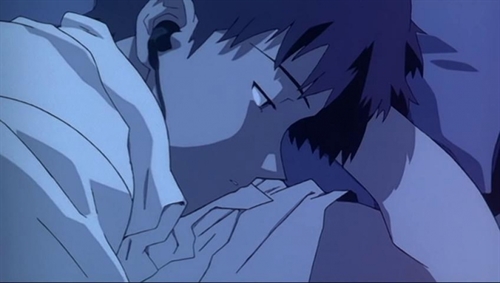

In Episode 25, NERV is under attack by the forces of SEELE, and the lives of the pilots are threatened. As Misato takes Shinji to his Eva, Asuka is on the battlefield fighting SEELE's personal Eva army, and Rei is with Gendo to help start the events of the final episode. Throughout the action scenes, we see multiple deaths as NERV's staff is brutally shot or incinerated, and a couple of the supporting cast members die on screen. The scenes are action-packed, but it all changes in Episode 26.


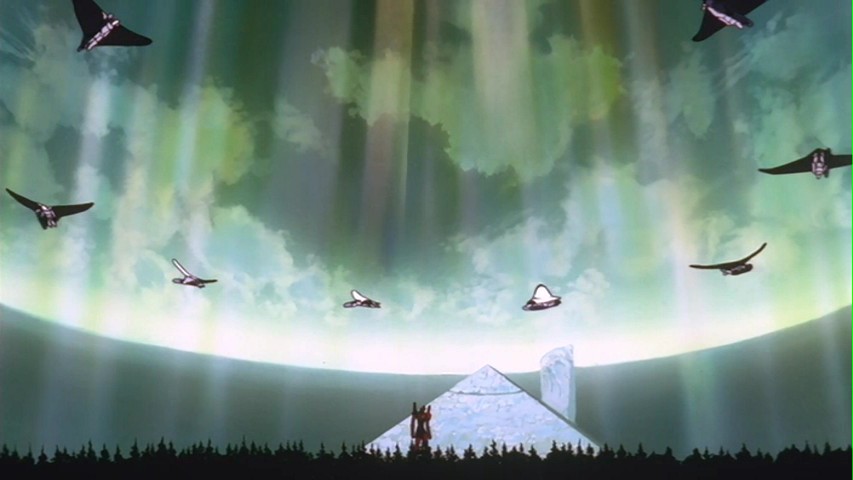
Episode 26 is where the film takes a sharp turn, and it becomes disturbing and confusing like a visual roller coaster of terror. Without spoiling any of the important parts, the film goes straight into Shinji's mind as the planet begins a straight course into destruction, and Hideaki Anno goes into the territory that is somewhat familiar in several of the works of Mobile Suit Gundam creator, Yoshiyuki Tomino. Technically, everything becomes an eventual Hell for the remaining cast, and Shinji is eventually tormented with both memories and nightmares that goes into his head. This occurs in the film until the very end when we see one finally short segment that finally concludes the film.
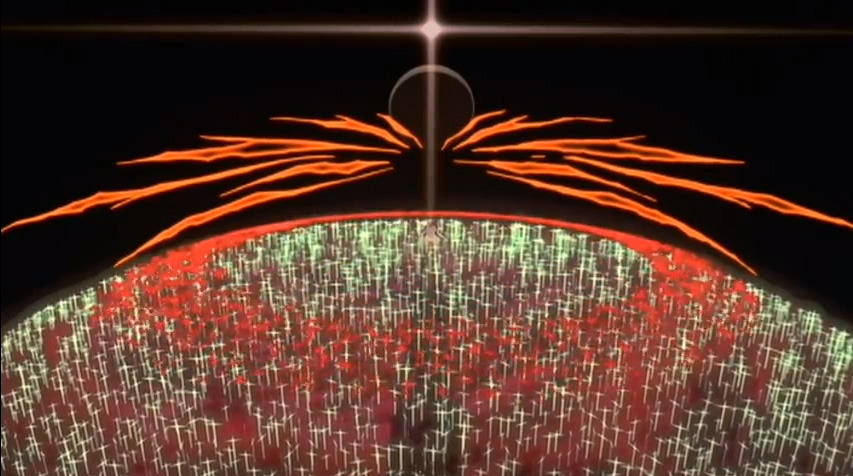

After I was done watching the film, I asked myself one final question: Is this really what the fans of Evangelion wanted from Anno after they were disappointed by the final two episodes of the TV series? If it was, I would want to ask them if they were satisfied with the final result that Anno came up with. Before I end this review and give my final opinion about it, I want to bring up how many people who watched this either liked it or hated it, and how it's complicated to understand what type of movie The End of Evangelion really is. Those who liked this movie believe that it is a film that concludes a great series like Evangelion, but the people who didn't like it say that it's a confusing film that is hard to understand.  Now, that I watched the film, I don't really think it should be called one at all. It's a complete look into the mind, and it's also an experience that must be seen to be believed.


In short, I recommend this film, but to view it in a way that I believe Anno wants it to be seen, anyone who watches The End of Evangelion must watch it with an open mind. They should also be prepared for it before they even press play. Like Death and Rebirth, the DVD is out of print, but it can easily be found on online shopping sites. I have to admit that this was the toughest review I had to write, and there will probably be a tougher one down the road. However, I will eventually return to Evangelion, since there is the existence of the Rebuild of Evangelion film series, and there may be some topics I may want to cover more closely in some sort of analysis. Until then, I shall go back to review several series, movies, and OVAs that are very familiar with the anime/manga fan base.

Written by Nolan Schmidt

Wednesday, February 19, 2014

Evangelion - Death and Rebirth: A Review

Last Saturday, I posted my review of Neon Genesis Evangelion, and I mentioned near the end that I would "eventually review both Death and Rebirth and The End of Evangelion when the time comes." Well, the time finally came, but I feel that reviewing both films in two separate posts would be a bit better for me to do than to do them as one full review.


The concept of these films came after many fans of Evangelion were disappointed by the last two episodes of the television series. They sent angry letters to the creator, Hideaki Anno, and vandalized Gainax, the company that produced the series. This would eventually lead to the announcement of two final Evangelion films, and one of these films was Death and Rebirth.


In my post about Evangelion, I commented that this particular film was actually "a 'recap episode' that also contain a 27 minute sneak-peak for the following film," and technically, that's what the film is. The film was released almost a year after the series ended in 1996, so the producers decided that they should re-inform their fans and tell their audience of what happened in the show. However, how it's done in the film is completely different as it focused more on the characters than the actual story. The characters are separately described through certain chosen clips of those certain individuals from the show. This is all done through the first three-fourths of the film, which is called "Death," before the audience eventually gets a five minute intermission.

Really? An intermission?

Then, we have "Rebirth," which is literally the first half-hour of End of Evangelion, and this is where I personally started enjoying the film. There is action with a hit of drama, but this eventually ends with a "cliffhanger" that involves one of the main character who is about to start a battle with the enemy's backup forces.


I would like to recommend this film. However, I feel that it would be better for people to watch the show instead of this film before diving head first into the alternate ending that is also known as End of Evangelion. There is indeed some new footage in the "Death" segment, but it's mostly just introductions of the main character about to play some classical music. But, if you would like to watch this film, you may have to buy a copy online since the original DVDs provided by Manga Entertainment has been long out of print.


Make sure to stay tuned for my upcoming review of End of Evangelion.

Written by Nolan Schmidt

Saturday, February 15, 2014

Neon Genesis Evangelion: A Review

On October 4, 1995, an anime that changed the Mecha genre premiered on television in the country of Japan, and it also started one of the biggest franchises that was either hated or enjoyed by many anime fans. This anime was known as Neon Genesis Evangelion.


The series, also known simply as Evangelion, was created and directed by Hideaki Anno. Anno was known for co-directing the anime television series, Nadia: The Secret of Blue Water, and he also animated the famous Giant Warrior sequence in Hayao Miyazaki's 1984 film, Nausicaä of the Valley of the Wind. Evangelion, to this day, is considered as Anno's best known work, and even though he is currently directing the final film for his Rebuild of Evangelion series, it's humble beginnings were a tough task for him since he suffered from an emotional break down half-way through production.


To start off, Evangelion is based around Shinji, a 14-year-old boy who is chosen to pilot a giant cyborg known as an Eva to fight against giant monsters, called Angels, that attack Toyko-3 in a post-apocalyptic Japan. Along with Shinji, there are two other pilots, Rei and Asuka, who protects Toyko-3 under the orders of NERV Commander Gendo Ikari, Shinji's father, and Misato, who is the operations commander and shares her apartment with Shinji and Asuka. Many of Evangelion's main characters have their own dark personal histories, and the audience eventually learns more about each character throughout the 26 episodes. For example, Shinji, the main character, suffers through his own problems based around the choices he has to make during the series, and that he also goes through daddy issues since he hasn't seen his father throughout most of his life until the first episode of the series. Also, there is several personal issues based around both Asuka and Misato separately, and they are strongly based around certain important plot elements and character development.


However, many fans seem to have a problem on how the television series ended. During the end of production, the budget for the show ran low, and the idea for originally ending the series was scrapped to create two intervention-style episodes based around Shinji, Asuka, Rei, and Misato. This final result ending was either accepted or rejected by fans. Those that rejected the chosen ending eventually sent letters to Anno on how disappointed they were, and a few of them actually threaten to end his life. What happened next led to the creation of two final Evangelion films, Death and Rebirth and The End of Evangelion. Death and Rebirth was considered as a "recap episode" that also contain a 27 minute sneak-peak for the following film. However, The End of Evangelion is considered as a proper end to the series for those who were disappointed of the aired ending.


In the case for Evangelion, I highly recommend it since it is considered a classic anime that has built a popular franchise. However, DVD sets of the episodes are currently out-of-print, and are pricey to get on online sites, such as Amazon. I will eventually review both Death and Rebirth and The End of Evangelion when the time comes, and I hope to get to the current Rebuild movie series in the near future as well.


Written by Nolan Schmidt

Friday, January 24, 2014

Where In The USA Is The Sailor Moon Anime?

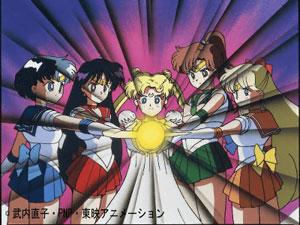
On July 6, 2012, it was announced that the Sailor Moon series would be getting a new anime series, and it would contain a new theme song performed by Momoiro Clover Z. Sailor Moon fans eagerly waited for the new anime to come, but it was delayed multiple times. Recently, on January 9th, it was finally announced that the new Sailor Moon anime would premiere this July, and that Toei Animation was going to be "adapting Naoko Takeuchi's original manga and starting from scratch again." Fans got excited again, and many of them now patiently wait for the premiere episode on Niconico.


This would probably be the first time that North American fans of the series would be able to watch their favorite magical girl team beat intergalactic villains on an instant online stream that would be subtitled in multiple languages. However, many of the fans in the U.S. still remember back in 1995 when the first Sailor Moon anime premiered on television, and even though the show was completely edited for content, it was still enjoyable for the American fans. But, it wasn't until after 2000 when the uncut episodes started appearing on DVD. Sailor Moon and Sailor Moon R was released in two subtitled-only season box sets by ADV Films, and both Sailor Moon S and Sailor Moon SuperS was released on bilingual DVD sets by Pioneer (now Geneon Universal Entertainment). Sailor Stars, the fifth entry to the anime series, never came to the U.S. due to the amount of content that would've been considered objectionable to television audiences at the time. Sadly, the DVDs became out of print after both ADV Films and Pioneer allowed the rights to expire around 2004 and 2005. The box sets are now very rare to get, and if anyone finds them for sale on sites like Amazon, they would be expensive to get (both new and used).


For the past decade, other American anime distribution companies, like FUNimation, have been trying to get the rights to the series, but sadly, no company owns the North American rights to the Sailor Moon anime as of now. However, in 2011, Kodansha USA re-released the first volume of the Sailor Moon manga, along with the first volume of Codename: Sailor V (the predecessor of Sailor Moon) on September 13th. This seemed like a sign to fans that Sailor Moon was making a big comeback to the U.S., but after all the manga was released, there was still no sign of the Sailor Moon anime until the news of the previously mentioned reboot.


In my opinion, as both an anime fan and a Sailor Moon fan, if there was possibly any company to get the rights from Toei, it would probably be either Sentai Filmworks or Discotek Media. However, I was able to get the first two uncut season box sets of Sailor Moon on DVD (after I spent a total of $296.46 to get them). Of course, I had to go through the existing flaws in the Sailor Moon R box set since an episode was missing, and the audio in the beginning of one of the episodes had some of the English dub soundtrack on it. Hopefully, since the recent announcement of the reboot, the Sailor Moon anime will finally make a comeback to the U.S., and the episodes could be enjoyed again by the American Sailor Moon fan base once again.


Written by Nolan Schmidt

Sunday, January 19, 2014

Miyazaki Reviews (Part Two)

From my personal DVD collection
Last time, I reviewed the first five feature-length animated films written and directed by Hayao Miyazaki, and now I will put my take on his other five films: Porco Rosso, Princess Mononoke, Spirited Away, Howl's Moving Castle, and Ponyo.


 Porco Rosso (1992)

In 1992, Miyazaki released Porco Rosso, a film based around Marco Pagot (an World War I ex-fighter ace who works as a full-time bounty hunter). However, a curse, which was put on the main character, turn him into a anthropomorphic pig, and due to this, he is known as Porco Rosso ("Red Pig" in Italian). Throughout the film, Porco goes out to bring air-pirates into custody, and he suddenly gets into a duel with an American pilot, Curtis. At one point, Porco goes into Italy, which in the time period the film is based on is being run by the then-fascist government, and befriends his mechanic's granddaughter, Fio, who eventually becomes his engineer.

This is probably one of the few Miyazaki films that is fully based around both aviation (which Miyazaki is a fan of) and politics (due to the anti-fascist themes in the film). Also, the film seems to only get little attention, even though it's a Miyazaki film. However, I found the film very entertaining, and very comical when it came to the scenes involving both Porco and Curtis.


Princess Mononoke (1997)

1997 was the year when Miyazaki released what I believe is one of his best works: Princess Mononoke. The film is about Prince Ashitaka, whose right arm is cursed after killing a demonized boar, and San, a young woman who was raised by wolves and attacks the local village of Iron Town (run by Lady Eboshi) due to her hatred of humans. Throughout the film, Ashitaka tries to prevent Lady Eboshi and Jigo, a mercenary monk, from killing the Forest Spirit, which takes form of both a spiritual giant and an elk.

The film itself was a hit in Japan, and it won the Japanese Academy Prize for Best Picture. It was also a violent film, which showed decapitations, dismemberment, and other graphic images. Due to this, the film was given a PG-13 rating in the United States. At one point, Miramax was about to trim out some of the most graphic scenes until Studio Ghibli sent them a katana (a traditionally made Japanese sword) with a simple message, "No cuts." The themes of the film were very pro-environmental, which is one of many themes that Miyazaki put into his films since Nausicaä of the Valley of the Wind.

  
 Spirited Away (2001)

After Miyazaki took a couple of years off from making Princess Mononoke, he created his next big hit, and what a hit it was. Spirited Away is about Chihiro, who ends up in a world full of spirits after her parents were turned into pigs after eating enchanted food, and her journey from working at a bathhouse for spirits, owned by Yubaba, to saving the life of a spiritual boy named Haku. Throughout the film, a strange being by the name of No-Face quickly becomes a major customer at the bathhouse after Chihiro lets him in, and we are soon introduced to Yubaba's son, Boh, and her twin sister, Zeniba.

Spirited Away eventually became an award-winning success for Miyazaki. It won the Japanese Academy Prize for Best Picture and Best Song, the Golden Bear at the Berlin International Film Festival, and the Academy Award for Best Animated Feature.


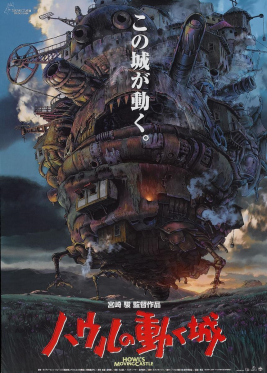
Howl's Moving Castle (2004)

A couple years after the success of Spirited Away, Miyazaki written and directed Howl's Moving Castle, which was based on the novel of the same name by Diana Wynne Jones. The film is based around Sophie, a young hat maker who is turned into a 90-year-old woman after being cursed by the Witch of the Waste, who becomes a cleaning lady for Howl, a wizard who saved Sophie early on in the film from the Witch of the Waste's minions. Sophie then lives with Howl and his young apprentice, Markel, in his moving castle that is powered by the fire demon, Calcifer. On her journey, she also meets a scarecrow in which she calls Turnip Head (due to his head being only a turnip with a face on it), and confronts Madame Suliman, the magical advisor of the King in the film. 

Even though it's a good film and it got an Oscar nomination, it was, in my opinion, one of Miyazaki's confusing films due to how the third act is played out, and how Sophie's age kept changing through the scenes near the end of the film. But, it still played out as a good story with unique characters.


Ponyo (2008)

Years after Howl's Moving Castle, Miyazaki released Ponyo (fully titled Ponyo on the Cliff by the Sea in Japan), and it was his first film since My Neighbor Totoro that was aimed for younger audiences. The film is based around a goldfish, Ponyo, that eventually turns into a human girl after falling in love with Sōsuke, a five-year-old boy who rescues her after she gets her head stuck in a jar. But, this leads an unbalance with nature in which Ponyo's wizard father, Fujimoto, and the spiritual Mother of the Sea, Granmamare (who is Ponyo's mother), tries to prevent.

Basically, the film is a retelling of Han Christian Andersen's "The Little Mermaid", except it is a more obscure story than the actual fairy tale. However, this causes the film to lack more in storytelling, but the film still remains to be very entertaining with its animation and design.

To end it all off, Miyazaki created a collection of films that keeps both his fans and animation fans entertained, and with the U.S. release of his final film, The Wind Rises, coming up next month, I think the best way to end this post is to watch the official trailer.


Until next time.

Written by Nolan Schmidt

Saturday, January 11, 2014

Miyazaki Reviews (Part One)


As part of my personal anticipation for the upcoming North American release of Miyazaki's final film, The Wind Rises, I thought that the best thing for me to do is review the previous ten films that Miyazaki wrote and directed from 1979 to 2008. Of course, I decided to do these reviews in two parts since there is an even amount of films.

From my personal DVD collection

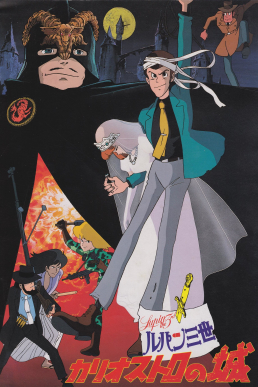
The Castle of Cagliostro (1979)

Ah, yes. Miyazaki's first feature film, and it's the one I've seen the most out of all of his films. Also, this is indeed a Lupin the 3rd film. For a bit of history about this film, Miyazaki worked on the first two Lupin the 3rd television series for TMS Entertainment before he was given the chance to co-write and direct The Castle of Cagliostro. As much to the film's plot, there lies a pretty good story, and it's one that I enjoyed every time I watched it.

Lupin and his partner-in-crime, the gun-slinging Daisuke Jigen, heads to the Grand Duchy of Cagliostro after finding out that the money that they stole from a casino was counterfeit bills made with special plates that are only available there. As they go out to steal the plates, Lupin eventually saves a young runaway bride, who is suddenly revealed as Lady Clarisse, but she is chased again after Lupin becomes unconscious. After gaining consciousness, Lupin finds her ring, and suddenly recalls everything he knows about Cagliostro. They are soon joined by the samurai, Goemon Ishikawa XIII, who reveals that Inspector Zenigata (who aims to arrest Lupin throughout the series) is currently visiting with the film's main antagonist, Count Cagliostro (who plans on marrying Clarisse in part of revealing a secret treasure deep within the Grand Duchy and has another ring that is exactly like hers). Throughout the film, Lupin attempts to save Clarisse with some inside help from his former lover/arch-rival, Fujiko Mine (who is incognito as Clarisse's lady-in-waiting).

As I mentioned before, the story is actually really good, and it has some pretty intense and comical moments throughout the film. However, there is only one problem that mostly Lupin the 3rd fans tend to point out as they watch the film: Lupin is being portrayed more as a gentleman thief than his regular over-the-top self. Let me explain what I mean. Lupin was mostly created as a cocky womanizing thief who does get competitive with Fujiko Mine (who tends to tease him whenever she beats him to what he tries to steal). However, it seems like Miyazaki and his co-writer, Haruya Yamazaki, wrote him to be more like a gentleman than his regular self. Even though this does occur in the film that uses Lupin the 3rd characters, it's actually an accomplishment for Miyazaki.

Even though this is one of my personal favorite Miyazaki films, it's not my favorite Lupin the 3rd film (although I still do enjoy it as one).


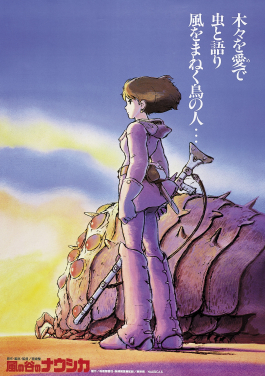
Nausicaä of the Valley of the Wind (1984)

Miyazaki's second film is considered one of his best, and in my opinion, it is. Nausicaä of the Valley of the Wind was based off of his manga of the same name which was created so he would be able to make the film.

The film is based around Nausicaä, a peace-loving princess from the the Valley of the Wind, who tries to stop a nearby kingdom, the Tolmekians, from unleashing a secret weapon to eliminate the Ohm, which are giant mutant insects, that live in the Toxic Jungle. Throughout the film, she is also joined by Asbel, a young pilot from another kingdom, who aids her on her path to stop Kushana, the leader of the Tolmekains, from unleashing the Giant Warrior.

Some little trivia about this film, it was produced by Isao Takahata, who would eventually co-found Studio Ghibli with Miyazaki after the film was released, and the sequence with the Giant Warrior was animated by Hideaki Anno, who would eventually create the famous Neon Genesis Evangelion series. Also, when the film was first released in the U.S., it was heavily cut and renamed to "Warriors of the Wind" by New World Pictures. Their actions would later lead to the famous "No Cuts" rule for any foreign releases of any of the films by Studio Ghibli.


Castle in the Sky (1986)

In 1986, Miyazaki released the first Studio Ghibli film to audiences in Japan. Fully titled, Laputa: Castle in the Sky, the film is based on the story of Pazu, an orphan who lives in a small mining town, and Sheeta, the Princess of Laputa, who try to find the secret of a mystical stone amulet given to Sheeta with the help from a family of air-pirates before Colonel Muska and his army can.

I know I may be bashed about my opinion of this film, but I couldn't find myself to enjoy it as much as Nausicaä. Don't get me wrong. I love the animation, the characters, and the story. However, I felt that some of the film felt a bit similar to Cagliostro. I'm not saying that Miyazaki did a ripoff of one of his previous films, but it seems like he recycled the "secret" bit with this one. Also, I felt that the film had some scenes that weren't really necessary to the story.

Of course, without a doubt, it's still an enjoyable film.


My Neighbor Totoro (1988)

In 1988, Miyazaki released one of his first films that was aimed for a younger audience. Totoro is the story of Satsuki and Mei, who move to the country with their father so that they could be close to the hospital where their mother is being treated with tuberculosis, and how they met the local tree spirits simply known as Totoro.

The film itself is loosely based off of Miyazaki's personal life due to his mother was sick with tuberculosis when he was a child. Also, the film was originally rejected from being green lit until both Miyazaki and Takahata decided to create a double-bill featuring both Totoro and Takahata's Grave of the Fireflies, which was a film adaptation of Akiyuki Nosaka's semi-autobiographical novel of the same name. Originally, the double-bill wasn't financially successful, but the studio did gain profits after allowing a toy company to make dolls based around the Totoros in the film.

In my opinion, even as an adult, this is a rather enjoyable film. Mostly, the scenes with the Totoros and the Catbus (yes, there is a giant bus-like cat in the film) tend to be the really enjoyable parts of the movie.


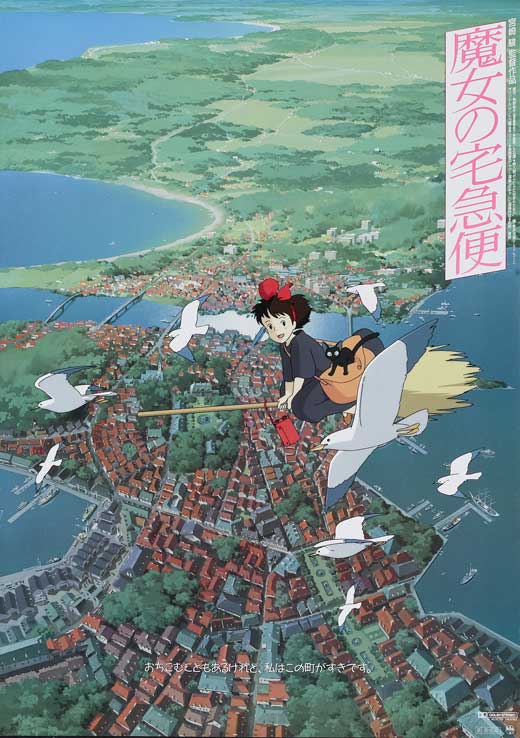
Kiki's Delivery Service (1989)

A year after Totoro was released, Miyazaki released Studio Ghibli first financially successful film, and that film was none other than Kiki's Delivery Service.

Kiki is a coming-of-age story about a young witch-in-training who moves to another town with her cat, Jiji, so she could find a way to use her magical powers to indepently help others. She moves in with a couple who works as bakers, and she helps them deliver baked goods to the citizens of the town. Afterwards, she creates a delivery service, and befriends Tombo, a young man who is interested in aviation.

To be honest, this was the first Miyazaki film I heard about when I was a kid, but I didn't get to see it until I was in high school. Kiki was highly advertised on many of the Disney VHS releases during the late 90s, and the English dub had Kristen Dunst as Kiki, Matthew Lawrence as Tombo, and Phil Hartman (in one of his last film performances before his death in 1998) as Jiji.


That is five films down, and five more to go. Next time, I will be reviewing his other five available films.

Written by Nolan Schmidt

Wednesday, January 1, 2014

Miyazaki: A Studio Ghibli Legend

As a fan of both anime and manga, I enjoy multiple series from Dragon Ball to Tenchi Muyo, but one of the things I love the most is anime films. Personally, as a filmmaker and an avid collector of different films of multiple genres, I love to sit down either in a movie theater or in the comfort of my own home to watch a full-length feature film, especially if it's an animated film. Ever since I was a child, I loved watching animated movies from the works of animation masters such as Walt Disney and Ralph Bakshi, but when I gotten more into anime when I was a teenager, I discovered the works of another animation master. That person was none other than Hayao Miyazaki.


The first time I ever heard of Miyazaki was when I was introduced to his Oscar-winning film, Spirited Away, in my freshman year of high school. I watched the film on Toonami, and found the animation and story to be both beautiful and creative. I looked more into Miyazaki, and found out about some of his other works. As of now, I have seen all of his films that are currently available on the home video market here in the United States, and I've enjoyed every film that he has both written and directed. Sadly, I haven't seen some of the other films that he was involved with, like the 1995 film, Whisper of the Heart, which he only written for the director, Yoshifumi Kondo, to work on.


Last Summer, Miyazaki released his long-awaited animated film, The Wind Rises, a film based on the life of aircraft designer, Jiro Horikoshi, and it had a successful release in Japan. However, Miyazaki officially announced his retirement in September, and said that his recently released film would be his last. I, along with other Miyazaki fans, were shocked and saddened to hear the announcement, but we all had a feeling that he would probably do so since he put his a lot of his artistic effort in multiple projects throughout his life. Since he began his animation career, Miyazaki worked with many companies like Toei Animation, Nippon Animation, and TMS Entertainment (where he got the chance to direct his first feature, The Castle of Cagliostro) until he finally co-founded Studio Ghibli with his good friend and fellow director, Isao Takahata, in June 1985. Of course, this February, Touchstone Pictures will be releasing an official English dubbed version of Miyazaki's final masterpiece, and I will be one of his many fans to see it on opening day.


I plan on doing a two-part series of mini-reviews of the ten available films that Miyazaki wrote and directed before the anticipated North American release of The Wind Rises. I will be reviewing his first five films (Castle of Cagliostro to Kiki's Delivery Service) in part one, and his other five films (Porco Rosso to Ponyo) in the second part. Hopefully, it won't take me too long to do the reviews, but I know that it'll be pretty fun to put my opinion about the films of one of my favorite anime directors.

Written by Nolan Schmidt